I'm posting this because it's absolutely horrifying, and because it's germaine to the site: critics of horror movies and violent video games etc. are constantly remarking that violent entertainment "desensitizes" people to actual violence. I say bullshit (and always have) and I offer as a case in point the just-posted You-tube video of the UCLA tasering incident, in which an American college student with a muslim-sounding name and dark skin is tasered by campus security once he's been handcuffed. The video (which I offer without the slightest trace of "voyeuristic intention" as Magenta put it in Rocky Horror) still has me shaking, because the screams are real.
It's different when it's real. Even we, who enthusiastically devour bloody movies at the rate of hundreds a month (if we get to pick the month) understand this. Link to the YouTube video.
"Here's your fucking Patriot Act!" he screams. Absolutely terrifying.
Friday, November 17, 2006

A short break from all these tedious reviews...

Hey guys, I know we're all tired and pushing through these reviews as best we can. Except for I'mnotMarc who's sitting over there like the kid who did his homework early. Since we're anticipating the end of this so we can all do our "best ofs," I thought I'd review the categories.
As penned by Summerisle in 2004:
1. Favorite
2. Hidden gem award
3. Most disturbing
4. Best scream queen or female lead you would most like to "take out to dinner"
5. Worst
6. So Bad It's Good award
7. Goriest
8. Most memorable death
9. Best looking monster
10. Scariest
I wanted to add "Best victim turned badass" but now that I look at these categories it seems too specific. What do you think? Can you think of more good ones?
In closing, I'd like to point out that I'mnotMarc, who hadn't seen the "take out to dinner" line, put Donald Sutherland in Invasion of the Body Snatchers as his Scream Queen. Ha ha.
C.H.U.D. II: Bud the Chud

(1989) **
By now it was the last two days of the contest. I'd fallen behind on my reviews and so I hadn't been sending my Netflix selections back since I hadn't grabbed any screenshots yet. Naturally, it was too late when I realized that meant I wasn't going to get the two flicks on which I really, really wanted to end the contest. My only option was to hit Five-Star Video near my old house, and one of those two I had to snag on VHS. How's that for a teaser?
Neither of the movies I'm talking about are C.H.U.D. II, but if you get two movies at Five-Star the third one's free. This was the same day I would be seeing Grudge 2; my time was short and I knew what I wanted to find: a one star movie. I hadn't had one so far this year, largely due to all the great horror that's been coming out recently. Leeches! just wasn't quite bad enough, Snowbeast just didn't evince the hatred I reserve for the loathed one-star flicks. I wanted the cinematic equivalent of a Jackass stunt I saw once: I wanted a movie so bad it was like getting hit in the ass with a professionally-flung jai-alai ball.
And there, in front of me, was Five-Star's VHS horror section, the source of so many wonderfully bad choices from the 2004 contest. It's obscure like a video section from some parallel dimension, although I noted with satisfaction that a number of strange titles had been watched by one or more of us in previous contests. But which one to get tonight? A cheapo adaptation of some public-domain H.P. Lovecraft story? The 70's movie so vague that its box graphics were put together on a xerox machine? Eventually I went with this one, because the parenthetical appearances credited to its two main players were Head of the Class and Police Academy Six. "Six?" I thought, "they had to reach that far to try to entice me? It must be crap!"
Well, crap it is, but not nearly the crap I was hoping for. Two college kids lose the school's science cadaver by letting it roll away on a gurney. Rather than go get it, they decide it's easier to just steal a corpse from the local military complex (it turns out it is easier).
Enter the military, led by Robert Vaughn. It turns out the corpse is Bud, the last C.H.U.D. left over from the now-defunct military experiment to make...anyone? Anyone? Yes, that's right: super soldiers. If you've seen the original flick this is where you stand up, ruffle your hair and yell "Hey! They're rewriting the rules of C.H.U.D.! What happened to Underground, for pete's sake? This is like Xtro II, they're just trying to profit off of a successful name!" Then you reconsider, realizing neither Xtro nor C.H.U.D. were very successfull. Hopefully you did that before saying anything out loud.
*Sigh* Xtro II, now there was a one star movie.
In his review, I'mnotMarc declares the events leading to Bud's revival too ridiculous to recount. He's right, but I need to include one element I loved for its pure amateurishness. Bud's lying in a full bathtub (never mind) while our heroes are in the bathroom trying to make plans without the parents overhearing, so instead of talking in low tones one of them turns on the hair dryer and starts waving it around over the tub. This was the same guy who saw their first corpse rolling away and said "forget it, it's gone."
Horror/comedies like Slither or Shaun of the Dead are good because they've got real horror movies attached to them. C.H.U.D. II doesn't: what were reptilian monsters with glowing eyes in C.H.U.D. are now just folks in light green makeup whose teeth have been blackened to look sharp. They caper around from gag to gag, led by the admittedly amusing Bud (the P.A.6 guy), eventually winding up at the school costume dance for more capering. Approaching the building, they momentarily imitate a step from the Thriller video, then while at the dance they keep trying but failing to bite the students, as the kids' dance steps keep making them miss.
I know this sounds loathable enough for a single star, but the performance by Robert Vaughn is enough to boost it higher. He plays the general in charge of the C.H.U.D. project, and since we see the project's funding cut right at the start, the escape of their lone C.H.U.D. is the best thing that could happen for him. He follows the growing army around with glee, celebrating each C.H.U.D. victory as evidence of the project's success and dismissing the resultant human carnage. He's also got great lines like "in my day, when a kid stole a corpse he'd be punished for it!"
I wish this was on dvd so I could find of pic of the "hot" bathing suit the heroine dons to bait the final C.H.U.D. trap. It's one of those late 80's fashion debacles that must've seemed clever at the time, but now makes you wanna go back in time and somehow erase the late 80's. I would've done that already if it didn't mean I'd have to lose my virginity again.
The Grudge 2
(2006) ***1/2
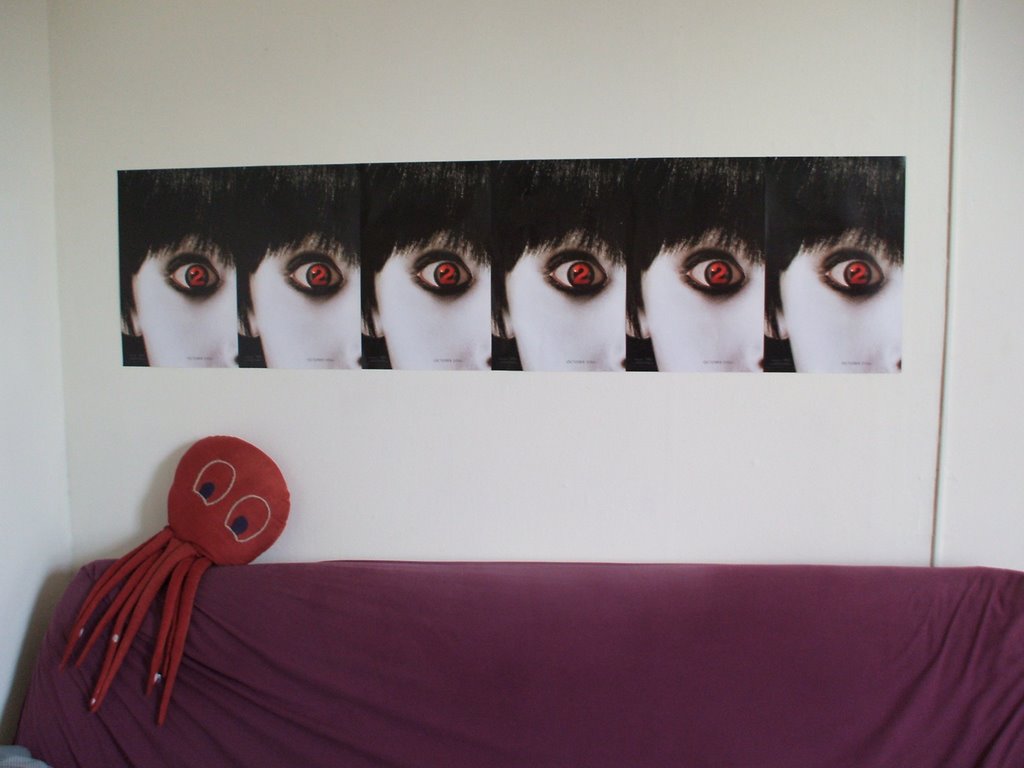
In the heady days before the contest, one of our local big theaters was giving out these mini Grudge 2 posters, so I had each of my friends get one and give it to me. I arrayed them above my couch as Horrorthon decoration; now Toshio could watch the Horrorthon with me...six of him. I liked the way the white half-faces were shaped by the black, it reminded me of the monster from It Came from Outer Space. Later, my roommate brought home an eight-foot tall vinyl poster from the other local big theater, where he works. My intention was to hang it on the adjacent wall in my room, but an ill-placed vent on that wall meant I'd need a ladder to hang it high enough. My temporary get-the-wrinkles-out spot just became the spot, and so I've been loudly advertising this movie to anyone who happens through our back yard. Since I'd taken part in the hype so much, I figured it would be bad form to miss viewing Grudge 2 for the contest, and like Saw Day I crammed it in right at the end.

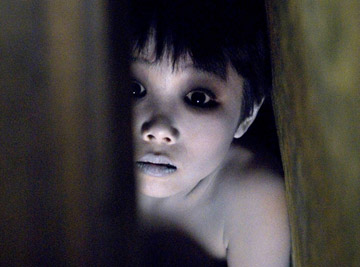
With the singular exception of The Ring, Hollywood's courtship of J-Horror has been a pretty clumsy affair. The Grudge 2 is the best forward step I've seen yet, topping the first one by successfully hitting that all-important mood. The first time we see the horrible ghost, it's another fine example of Shimizu's talent at the scare. A hapless schoolgirl is trapped in the closet when Kayako's pale, croaking face comes floating down from the attic opening. She's either crawling head first or she's just a floating head, you can't tell, and the effect is instantly riveting.
When Sarah Michelle Gellar's storyline is introduced, her sister is phoned by their bedridden mother. Between Mom having to hit the oxygen and Amber Tamblyn's reluctance to get her sister from Japan, the dread is wonderfully palpable. And before Amber can even get her coat off, her sister's body lands on the concrete right in front of her. The mood is bleak and hopeless and off to a great start.
Unfortunately, I found the rest of the movie to be hit-or-miss, with the misses increasing as the three storylines went forward. Some of the hits were stellar, and all of the stories have some great scares to offer. One of my favorites was the drawn-out look Kayako gives the reporter, peering out of his darkroom tray with her fingers hooked over the rim. It was a beautiful, Edward Gorey-like moment that gave me shivers. The Chicago storyline offers some deft touches as well; I liked when stepmom Jennifer Beals has her ear to the wall of the next-door neighbor's room, the epicenter of the haunting. The milk scene that I'mnotMarc mentions in his review is a good one, too. (And here's JPX's review while I'm at it.)
So what's my problem? Part of it was the explanations that got trotted out. Kayako's journal was a neat visual touch, with that eye peeking through the pages, but as a plot device it was too pat. I took a class on Japanese cinema once, and I recall symbolic tendency to equate the East with dark shadows and the West with obnoxious, invading light. I felt this mystery-solving influence at work here; there's a scene in which Amber and her Japanese reporter friend find out Kayako's mom was a healer of sorts who would exorcise people's evil spirits and feed them to her daughter. Do you find that interesting? Yeah, me neither.

My other problem was one I had with the first Grudge, that after a while Kayako just seems like a croaking jack-in-the-box and her manifestations are no longer frightening. In the climax of the first one, this just got silly: she's crawling down the stairs towards Buffy, then she's in the doorway behind her, then she's -- you get the idea. In #2 there are a number of clunkers, and it got me down. One character says to Amber "you've brought her with you!" and then we get the blurry POV of that person, and Amber is just suddenly replaced by Kayako and she starts crawling towards the camera. C'mahhhn.
There's a minor whodunnit-style mystery to the layout of the three storylines that kind of bugged me. They actually do offer the answer of how the two Tokyo storylines relate to each other time-wise, so the Chicago question is "who is the mysterious figure in the hoodie?" It's not much of a mystery, really.
Despite each having shortcomings, both Japan storylines end on high notes, particularly Amber Tamblyn's. We find out where the croaking noise comes from and get a peek into the real reason for Kayako's wrath. It's implied, as in original Ju-on, that her husband's rage has more to do with this curse than the mother and son's ubiquitous presence might suggest.
It's frustrating to fathom the East/West split with the Ju-on/Grudge movies since they're all made by the same director. Was he pressured to provide more answers for the new audience? Was it some committee who demanded more big music cues to go with the scares? Did Shimizu tweak the vibe himself because he thought it necessary? Or do the circumstances of Eastern moviemaking just intrinsically boost the art by making the artists work with limitations?
Well...I sure don't know. Something to watch for as these remakes keep happening. I choose to remain optimistic; they'll make another Ring one of these days.
Thursday, November 16, 2006
The Amazing Mr. X
(1948) **1/2
“Even a free spirit eventually has to come inside, put on her shoes, and start going to dinner parties.”
First things first, The Amazing Mr. X bears no relationship to Doctor X (1932), The Return of Doctor X (1938), X-Men (2000), or JPX. What is it with the letter “X” anyway? Did someone just declare the letter “X” to be used when something needs to be designated as cool?
See what I did there?
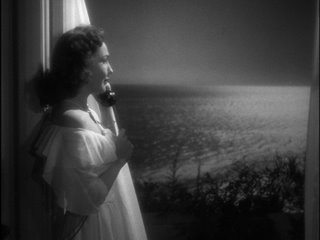
Two years after the death of her late husband, Paul, from a fire-engulfed car crash, Christine Faber is still grieving. As the film opens she is standing on a balcony looking forlornly out at the sea. While listening to the gentle lapping sounds of the nighttime surf, she begins to hear her name whispered. This bizarre occurrence is quickly interrupted by Christine’s dizzy younger sister, Janet, who reminds Christine that she needs to get ready for her date with Martin, her steady, lawyer, gentleman caller who might just be gearing up to propose. As she prepares for her (most likely chaste - stupid 1930s morality) night with Martin, he calls and informs her that he’s running late due to a last minute, unexpected client crisis (for those who care that’s my every day. you don’t care, do you?. hello? sigh.).
Christine and Martin chillin’
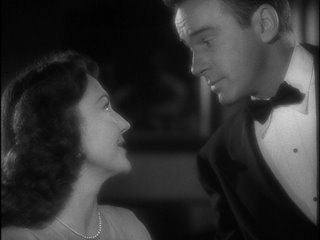
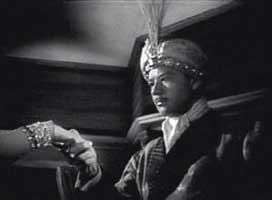
Taking this delay like a man, Christine decides to walk to Martin’s house via the sweet beach they live on. While trekking through the surf, Christine’s serenity is disrupted by Alexis (The Amazing Mr. X), a “spiritualist” who quickly alarms Christine with detailed knowledge about her life. Despite a strong urge to get away from this unctuous man, she is intrigued to learn more, after all her dead husband might be haunting her and who better to play Ghostbusters with? She reluctantly takes his business card and continues her journey to Martin, where they have (probably a really lame) date. Later that night Christine is awakened by strange sounds and events. The French doors leading to her balcony blow open, the wind knocks all of her Martin-related mementos from their places on the end table, and once again she hears Paul’s voice calling her. Appropriately bothered by this, she makes an appointment with Alexis. Over time her appointments with Alexis increase in frequency much to the dismay of Martin and Janet, who believe Alexis is a flimflam man. Janet decides to take matters into her own hands, but of course,
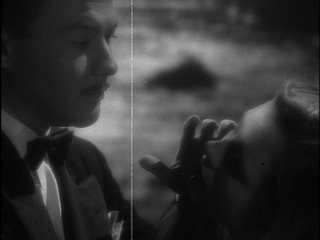
Yep, she falls in love with him. As the film unfolds we learn that Alexis is not just any ordinary con artist and that Christine’s dead husband might not be that dead after all. Just who is conning whom here?
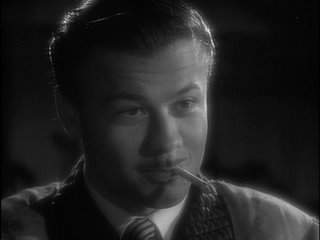
The Amazing Mr. X is not very amazing but it’s a semi-entertaining caper with a pretty good twist or two. On a personal note, I always get annoyed at psychics, believing them all to be antisocial assholes taking advantage of people’s emotions. This film does a pretty good job at showing us just how they do it (e.g., cold readings and other chicanery). Not recommended, but good for upping one’s Horrorthon numbers.
Watch the film for free right here, http://www.veoh.com/videoDetails.html?v=e118230QD4AmZkY
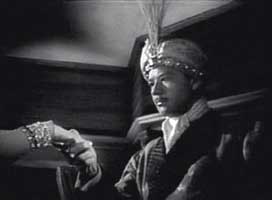
“Even a free spirit eventually has to come inside, put on her shoes, and start going to dinner parties.”
First things first, The Amazing Mr. X bears no relationship to Doctor X (1932), The Return of Doctor X (1938), X-Men (2000), or JPX. What is it with the letter “X” anyway? Did someone just declare the letter “X” to be used when something needs to be designated as cool?
See what I did there?

Two years after the death of her late husband, Paul, from a fire-engulfed car crash, Christine Faber is still grieving. As the film opens she is standing on a balcony looking forlornly out at the sea. While listening to the gentle lapping sounds of the nighttime surf, she begins to hear her name whispered. This bizarre occurrence is quickly interrupted by Christine’s dizzy younger sister, Janet, who reminds Christine that she needs to get ready for her date with Martin, her steady, lawyer, gentleman caller who might just be gearing up to propose. As she prepares for her (most likely chaste - stupid 1930s morality) night with Martin, he calls and informs her that he’s running late due to a last minute, unexpected client crisis (for those who care that’s my every day. you don’t care, do you?. hello? sigh.).
Christine and Martin chillin’
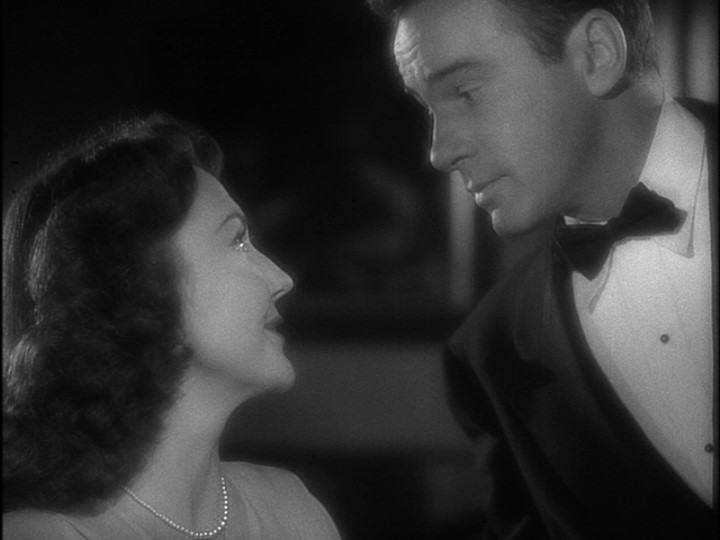
Taking this delay like a man, Christine decides to walk to Martin’s house via the sweet beach they live on. While trekking through the surf, Christine’s serenity is disrupted by Alexis (The Amazing Mr. X), a “spiritualist” who quickly alarms Christine with detailed knowledge about her life. Despite a strong urge to get away from this unctuous man, she is intrigued to learn more, after all her dead husband might be haunting her and who better to play Ghostbusters with? She reluctantly takes his business card and continues her journey to Martin, where they have (probably a really lame) date. Later that night Christine is awakened by strange sounds and events. The French doors leading to her balcony blow open, the wind knocks all of her Martin-related mementos from their places on the end table, and once again she hears Paul’s voice calling her. Appropriately bothered by this, she makes an appointment with Alexis. Over time her appointments with Alexis increase in frequency much to the dismay of Martin and Janet, who believe Alexis is a flimflam man. Janet decides to take matters into her own hands, but of course,
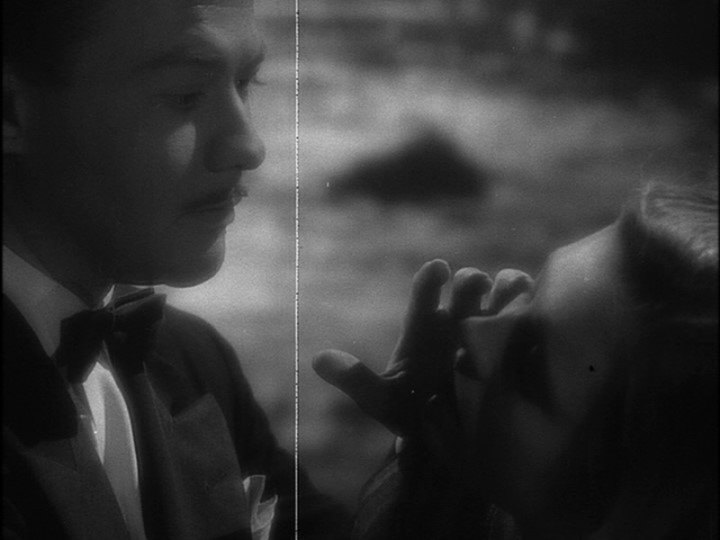
Yep, she falls in love with him. As the film unfolds we learn that Alexis is not just any ordinary con artist and that Christine’s dead husband might not be that dead after all. Just who is conning whom here?
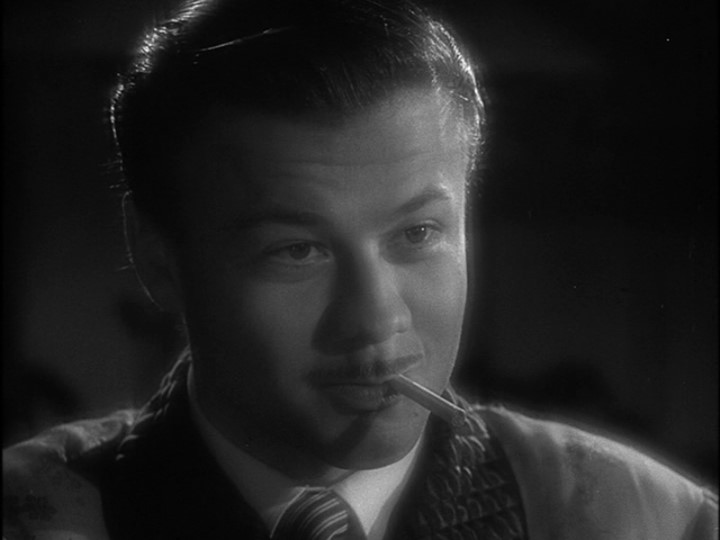
The Amazing Mr. X is not very amazing but it’s a semi-entertaining caper with a pretty good twist or two. On a personal note, I always get annoyed at psychics, believing them all to be antisocial assholes taking advantage of people’s emotions. This film does a pretty good job at showing us just how they do it (e.g., cold readings and other chicanery). Not recommended, but good for upping one’s Horrorthon numbers.
Watch the film for free right here, http://www.veoh.com/videoDetails.html?v=e118230QD4AmZkY
Wednesday, November 15, 2006
The Dead Zone
(1983) ****

Johnny (Christopher Walken) has everything going for him – a teaching job that he's passionate about and a blossoming relationship with a fellow teacher. But after a car accident puts him in a coma for 5 years, he awakens to a world radically different from the one he knew - a world in which his girlfriend has moved on with her life; now married with a child named Denny. (Stupid name for a stupid kid.) Before he can even begin to adjust to his new circumstances, he has a vivid premonition of a deadly fire after physical contact with his nurse. This premonition leads to saving her daughter's life. Johnny has been given the gift of not only being able to see the future, but also the ability to alter it!
After subsequent experiments and demonstrations, Johnny must now decide how this power should be used. The potential to save lives is not something to be taken lightly and this raises a slew of moral questions. Is it now his moral obligation to help others? Whose lives deserve to be saved? With so much at stake, should he even be the one to choose? If he chooses not to, would there be blood on his hands? (Rasputin and Spiderman also faced such a dilemma with varying results.) As Johnny is a noble man, he agrees to assist the police in apprehending a notorious serial killer.
His morality is then given the ultimate test after shaking hands with presidential candidate Greg Stillson (superbly played by Martin Sheen.) His ensuing premonition reveals that Stillson will one day be solely responsible for the death of millions. This opens up another old moral query: if you could go back in time with a chance to kill Hitler as a child, would/should you do so?
Overall I have mixed emotions about the Dead Zone because it seemed to jump from idea to idea a little too erratically. Three different quality movies could have been made from this King/Cronenberg/Walken collaboration. 1) Johnny trying to move on with his life after the world has forgotten him. This would still be a compelling story without any of the supernatural aspects. 2) Johnny using his powers to track the killer and 3) Johnny using his powers to prevent the apocalypse. Unfortunately the movie lacked fluidity and ultimately played out like an anthology. I *head lowered in shame* haven't yet read the book but I'm assuming that this was a case of Cronenberg trying to jam too much into a 2 hour film and being forced to sacrifice integral character development and plot buildup. Still, I loved this movie and my criticisms are nitpicky only because I'm comparing it to the Shining versus Salem's Lot (the movies).

Johnny (Christopher Walken) has everything going for him – a teaching job that he's passionate about and a blossoming relationship with a fellow teacher. But after a car accident puts him in a coma for 5 years, he awakens to a world radically different from the one he knew - a world in which his girlfriend has moved on with her life; now married with a child named Denny. (Stupid name for a stupid kid.) Before he can even begin to adjust to his new circumstances, he has a vivid premonition of a deadly fire after physical contact with his nurse. This premonition leads to saving her daughter's life. Johnny has been given the gift of not only being able to see the future, but also the ability to alter it!
After subsequent experiments and demonstrations, Johnny must now decide how this power should be used. The potential to save lives is not something to be taken lightly and this raises a slew of moral questions. Is it now his moral obligation to help others? Whose lives deserve to be saved? With so much at stake, should he even be the one to choose? If he chooses not to, would there be blood on his hands? (Rasputin and Spiderman also faced such a dilemma with varying results.) As Johnny is a noble man, he agrees to assist the police in apprehending a notorious serial killer.
His morality is then given the ultimate test after shaking hands with presidential candidate Greg Stillson (superbly played by Martin Sheen.) His ensuing premonition reveals that Stillson will one day be solely responsible for the death of millions. This opens up another old moral query: if you could go back in time with a chance to kill Hitler as a child, would/should you do so?
Overall I have mixed emotions about the Dead Zone because it seemed to jump from idea to idea a little too erratically. Three different quality movies could have been made from this King/Cronenberg/Walken collaboration. 1) Johnny trying to move on with his life after the world has forgotten him. This would still be a compelling story without any of the supernatural aspects. 2) Johnny using his powers to track the killer and 3) Johnny using his powers to prevent the apocalypse. Unfortunately the movie lacked fluidity and ultimately played out like an anthology. I *head lowered in shame* haven't yet read the book but I'm assuming that this was a case of Cronenberg trying to jam too much into a 2 hour film and being forced to sacrifice integral character development and plot buildup. Still, I loved this movie and my criticisms are nitpicky only because I'm comparing it to the Shining versus Salem's Lot (the movies).
Hostel

(2005) ****1/2
After reading JPX's and Summerisle's glowing reviews earlier in the contest, I made sure I was able to squeeze Hostel into the mix. Shortly after starting it up, I said "HEY! This is another Road Trip Gone Bad! I've been duped into more Mad Hillbillies! Arrrgh!" But no, that is not actually the case at all, and not just because the mutant cannibals have been replaced by hot Slovakian girls, although that certainly helps.
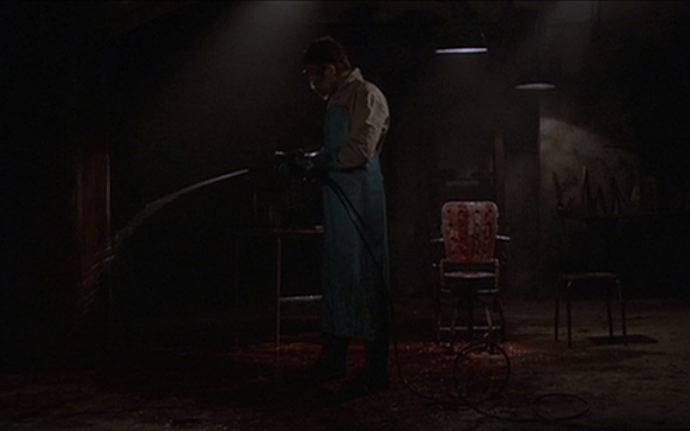
To further explore the difference between this and all the Chainsaws Have Eyes movies, I'll admit a rather basic confusion I had about Hostel right up until I saw it. All the talk about the Wonderful Love Hostel that suddenly turns into Horrible Torture Factory leaves out the fact that they're not the same place. I was seeing these stills of grotty industrial interiors and wondering how anyone could ever mistake that space for a sex haven. They don't: they get slipped a knockout drink while still partying and wake up several miles away cuffed to a chair.
Since you probably want to whack me upside the head right now for missing this piece of obviousity, I'll make a point. The reason Hostel is so scary and effective is that when you find out the whole town's in on it, it means the whole town. Not some half-wit, his grampa and some pigs. Everybody. That's how they can operate at two wholly different locations. When Paxton appeals to the police, it's not Sherriff Fuckyou in his stinky squad car, it's a guy surrounded by coworkers in a large bustling office. When our hero's journey is much further along and he's met some of the Factory's clientelle, the true, delicious shape of the paranoia reveals itself: these people have, collectively, made a horrifying choice. The odd stares you notice when you walk into the town bar are not harmless whiffs of disdain for obnoxious Americans, but evidence that you are the other side of a terrifying line here: you are product in the most brutal way possible. And they're not even going to have the courtesy to eat you afterwards.
With that bit of the town's character in place, the ominous behavior of the townfolk is pretty entertaining. When Josh and Paxton score with their hottie roommates on the first, non-torture night, the two girls share an interesting look while they're both going at it; you get the feeling they really like this tag-team Black Widow thing they have going on. (It also helped that the scene's music was the Sneaker Pimps' cover of How Do, Britt Eckland's naked song from The Wicker Man, in a deliberate homage.) And one of my favorite moments, the one I feel best lays out the predator/victim dichotomy, is Takashi Miike's cameo. Thinking that Paxton is a fellow Factory client, he smiles and says "be careful you don't spend all your money in there." The implied camraderie is cree-py.

The torture, when we get to it, is of a particularly nasty stamp. The barbarous acts themselves don't get a huge amount of actual screen time, but the few gory set pieces are chosen very carefully. There's a ghastly bluntness to it; these people are interested in straightforward damage, as when Josh just gets power-drilled in the legs, or when Paxton's torturer simply claws at his chest with one of those gardening forks. I figured we were shown the S&M scene in Amsterdam as a purposeful counterpoint to the Factory: this shit is not sexy. For the clients it may be, but the rest of us just really want to get out of that fucking chair.
Which, to me, was Hostel's other big achievement. After the wicked portrayal of the sociopathic town and the dark secret at its core, the bulk of the film is an escape story. It's a very good one, too, allowing further glimpses of gore while the movie shifts its stance to that of a thriller. And seriously, what's more frightening in the real world than going up against the Russian mafia? (I know these guys aren't actually Russian, but they're great big eastern European guys in leather jackets. Eek!) Each step of the way is aided by the teeensiest of lucky chances, and boy oh boy do you empathize with the need to get out of there. So much so that when the cavalcade of revenge opportunities begin, you don't question the circumstances, you stand up and cheer.
This movie is like taking a trip you know will be taxing but you're completely jazzed about it when you get home.
What they said. See Hostel.
Tuesday, November 14, 2006
Friday the 13th Part VI: Jason Lives
(1986) ****
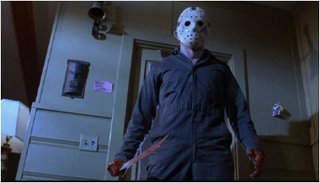
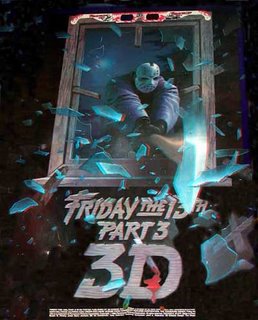
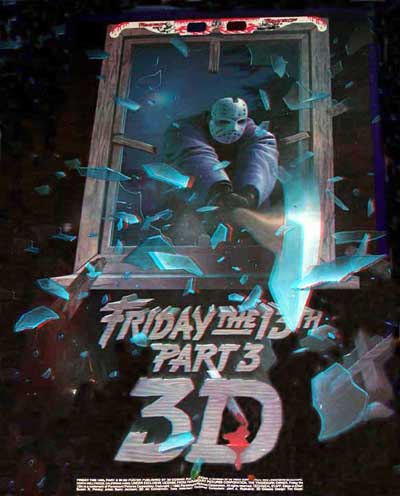
“Four stars!” you ask? Before you get your panties in a bunch let me clarify this seemingly non-deserved rating. As a whole I would rate the Friday the 13th series as a **1/2, with a low of ½ star for Jason X. The four star rating is for the film within this series, not how it stacks up against other horror films, which would earn it a three-star rating at most. I’ve watched all the Friday films countless times for Horrorthon and over time my favorite has changed. For many years it was Friday the 13th Part III, in 3D. In fact, I had this gear poster in my bedroom during the 80s,
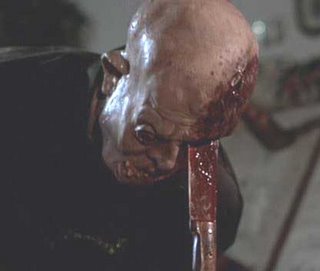
At times I’ve also considered Part IV to be the best because Jason finally bites it at the hands of creepy, bald Corey Feldman,

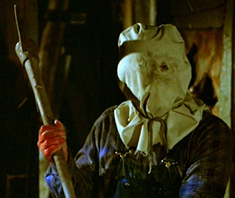
For God knows what reason, Summerisle has always been partial to Part II, where Jason sports a reeeeeeeeealy scaaaaaaaaaary (not) potato sack for a mask. I mean come on, is this scary?
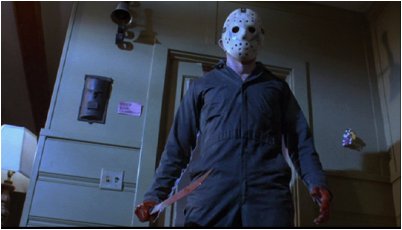
Anyhoo, I’ve recently concluded that Part VI is my favorite.
A bit of history for those not in the know (i.e., cool people); at the end of Friday the 13th Part IV: The Final Chapter, Jason is killed. In fact the director ensured that Jason wasn’t coming back by giving him the mother of all headaches with a machete slicing his face in half (see above photo). In Friday the 13th Part V: A New Beginning, Jason is back, or is he? No, not really. At the end of the film we learn that “Jason” was just a disgruntled paramedic, yawn. Things looked pretty bleak for the now-long-in-the-tooth horror film series. It was finally decided to bring Jason back for another installment, the “real” Jason. Part VI pretends that Part V never existed and is a direct sequel to Part IV.
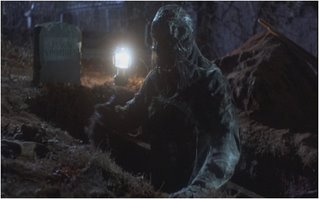
In Jason Lives, years have gone by and Tommy (Corey Feldman in Part IV) is older and suffering from posttraumatic stress disorder (well wouldn’t you?). As the film begins, Tommy drags poor, protesting Arnold Horshack to the graveyard to defile Jason’s grave. After digging up Jason’s corpse during a lightening storm and stabbing it repeatedly with a metal rod from the graveyard’s fence, Tommy is just as surprised as the rest of us (I wasn’t surprised) when a lightening bolt strikes the metal rod, which is conveniently still puncturing Jason’s maggot-ridden corpse. Long story short, Jason’s back. His first act after such long slumber? Killing Tommy? Nope. Killing poor Arnold Horshack of course!
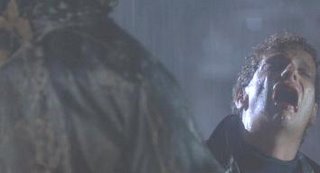
Although Tommy attempts to inform the police that Jason’s back, they summarily dismiss his rantings as those of a crazy person. Meanwhile the body count grows as Jason does what Jason does best, kill with detached ennui (wait just a gosh-darn minute, where have I heard that before?).
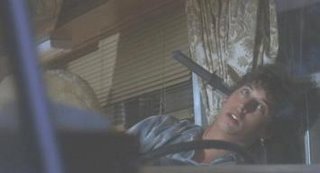
That’s pretty much the plot. If you’ve every seen a Friday the 13th flick, you get the gist. While I watched it this time I took notes on the 14 killings,
Jason rips Horshack’s heart out (good)
Spear through the chest (meh)
Spear through head (yawn)
Arm ripped off (yes!)
Triple decapitation (woo-hoo!)
Broken bottle to neck (zzzzzz)
Machete through 2 people sitting on motorcycle (nice!)
Face pushed into metal wall in camper leaving imprint on other side (my favorite)
Knife in ear (gross)
Head turned around (it’s been done before)
Thrown through a window (boring)
Knife throughout forehead (ouch)
Head squeezed to death (unnecessary)
Bent in half (yes!)
Jason Lives is my fave because it’s the only film in the franchise that doesn’t have a gimmick going for it, its just Jason doing his kill-thang. In the original Friday the 13th, Jason’s really not even in the film; in Part II he wears, get this, a potato sack!; in Part III the gimmick is 3D, in Part IV the gimmick is his death; Part V is all about a fake Jason; in Part VII the gimmick is Jason vs. a telekinetic chick; Part VIII (eventually) brings Jason to Canada…er…Manhattan; in Jason Goes to Hell only Jason’s “evil” is in the film (so sucky), in Jason X he’s in outer space, and in Freddy vs. Jason, well, you know. Additionally, in Jason Lives the director wisely injects some humor into the script, giving the characters awareness of Jason’s history. At one point, while staring at Jason in the middle of the road, a character says to her husband, “I’ve seen enough horror movies to know that any weirdo wearing a mask is never friendly”. It’s little touches like this that make this my favorite film in the series.
Don’t worry, in the end Jason gets his,
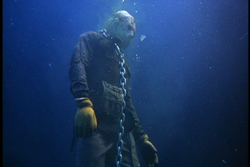
And as if there's not already enough reasons to love this film, we get the sweet Alice Cooper song, “He’s Back (the man behind the mask)” during the closing credits. Check it out here, it’s catchy, I promise!
He's Back (The Man Behind The Mask)
“Four stars!” you ask? Before you get your panties in a bunch let me clarify this seemingly non-deserved rating. As a whole I would rate the Friday the 13th series as a **1/2, with a low of ½ star for Jason X. The four star rating is for the film within this series, not how it stacks up against other horror films, which would earn it a three-star rating at most. I’ve watched all the Friday films countless times for Horrorthon and over time my favorite has changed. For many years it was Friday the 13th Part III, in 3D. In fact, I had this gear poster in my bedroom during the 80s,
At times I’ve also considered Part IV to be the best because Jason finally bites it at the hands of creepy, bald Corey Feldman,


For God knows what reason, Summerisle has always been partial to Part II, where Jason sports a reeeeeeeeealy scaaaaaaaaaary (not) potato sack for a mask. I mean come on, is this scary?

Anyhoo, I’ve recently concluded that Part VI is my favorite.

A bit of history for those not in the know (i.e., cool people); at the end of Friday the 13th Part IV: The Final Chapter, Jason is killed. In fact the director ensured that Jason wasn’t coming back by giving him the mother of all headaches with a machete slicing his face in half (see above photo). In Friday the 13th Part V: A New Beginning, Jason is back, or is he? No, not really. At the end of the film we learn that “Jason” was just a disgruntled paramedic, yawn. Things looked pretty bleak for the now-long-in-the-tooth horror film series. It was finally decided to bring Jason back for another installment, the “real” Jason. Part VI pretends that Part V never existed and is a direct sequel to Part IV.
In Jason Lives, years have gone by and Tommy (Corey Feldman in Part IV) is older and suffering from posttraumatic stress disorder (well wouldn’t you?). As the film begins, Tommy drags poor, protesting Arnold Horshack to the graveyard to defile Jason’s grave. After digging up Jason’s corpse during a lightening storm and stabbing it repeatedly with a metal rod from the graveyard’s fence, Tommy is just as surprised as the rest of us (I wasn’t surprised) when a lightening bolt strikes the metal rod, which is conveniently still puncturing Jason’s maggot-ridden corpse. Long story short, Jason’s back. His first act after such long slumber? Killing Tommy? Nope. Killing poor Arnold Horshack of course!

Although Tommy attempts to inform the police that Jason’s back, they summarily dismiss his rantings as those of a crazy person. Meanwhile the body count grows as Jason does what Jason does best, kill with detached ennui (wait just a gosh-darn minute, where have I heard that before?).
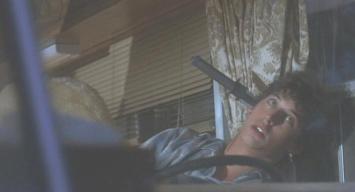
That’s pretty much the plot. If you’ve every seen a Friday the 13th flick, you get the gist. While I watched it this time I took notes on the 14 killings,
Jason rips Horshack’s heart out (good)
Spear through the chest (meh)
Spear through head (yawn)
Arm ripped off (yes!)
Triple decapitation (woo-hoo!)
Broken bottle to neck (zzzzzz)
Machete through 2 people sitting on motorcycle (nice!)
Face pushed into metal wall in camper leaving imprint on other side (my favorite)
Knife in ear (gross)
Head turned around (it’s been done before)
Thrown through a window (boring)
Knife throughout forehead (ouch)
Head squeezed to death (unnecessary)
Bent in half (yes!)
Jason Lives is my fave because it’s the only film in the franchise that doesn’t have a gimmick going for it, its just Jason doing his kill-thang. In the original Friday the 13th, Jason’s really not even in the film; in Part II he wears, get this, a potato sack!; in Part III the gimmick is 3D, in Part IV the gimmick is his death; Part V is all about a fake Jason; in Part VII the gimmick is Jason vs. a telekinetic chick; Part VIII (eventually) brings Jason to Canada…er…Manhattan; in Jason Goes to Hell only Jason’s “evil” is in the film (so sucky), in Jason X he’s in outer space, and in Freddy vs. Jason, well, you know. Additionally, in Jason Lives the director wisely injects some humor into the script, giving the characters awareness of Jason’s history. At one point, while staring at Jason in the middle of the road, a character says to her husband, “I’ve seen enough horror movies to know that any weirdo wearing a mask is never friendly”. It’s little touches like this that make this my favorite film in the series.
Don’t worry, in the end Jason gets his,

And as if there's not already enough reasons to love this film, we get the sweet Alice Cooper song, “He’s Back (the man behind the mask)” during the closing credits. Check it out here, it’s catchy, I promise!
He's Back (The Man Behind The Mask)
Rasputin the Mad Monk
(1966) ***1/2
Based on the life of the enigmatic mystic "healer" who obtained great influence over the Russian Royal Family during the Romanov Dynasty, this film depicts one possible scenario of Rasputin's strange rise to power and eventual demise. "Yes, but this is extremely boring and it has nothing to do with horror", one might argue. Not true!
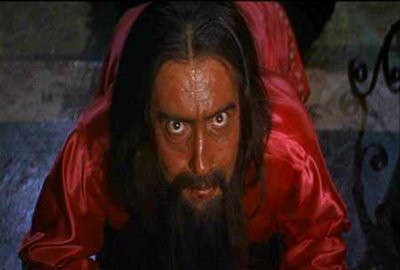
Though Hammer's take on the legend Rasputin is preposterous, it gave Christopher Lee the rare chance to play a character with some depth and complexity - (but thankfully he's still a bastard!) About one minute into the film, Rasputin kicks open the door and demands attention by shouting at everyone. Sporting a long beard and a deranged expression, he resembles a young Saruman just discovering his evil. Great hair, great look. Lee portrays Rasputin as a belligerent, wine guzzling womanizer. He dances, makes toasts to himself and excels at drinking competitions. He is also a hypnotist and a healer. But unlike Spiderman's "with great power comes great responsibility" nonsense,
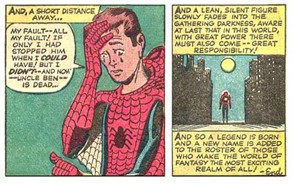
his philosophy on the matter is "the power is mine and I shall use it as I please!"
And use it he does. His first order of business is hypnotizing a servant and forcing her to push the tsar's son off of a rooftop so that he can wow the Royal Family with his gift. The scheme pays off and he quickly sleazes his way into high society. He makes many enemies along the way but systematically disposes them with his trickery. He drives one woman to suicide using hypnosis. Eventually his misdeeds catch up with him and his enemies put forth a concerted effort to bring the man down. But Christopher Lee does not go down easy. (For proof of this, refer to EVERY movie he's ever been in.)
Actually his death scene is one of the lengthiest I've ever seen on film (or in person for that matter). The true events surrounding Rasputin's murder have been greatly exaggerated over the years and Hammer milks this for everything its worth.
I'm aware that I'm a bigger fan of the Hammer films than my colleagues and therefore rate the movies higher than they likely deserve. However, I honestly don't have any bad things to say about this one.
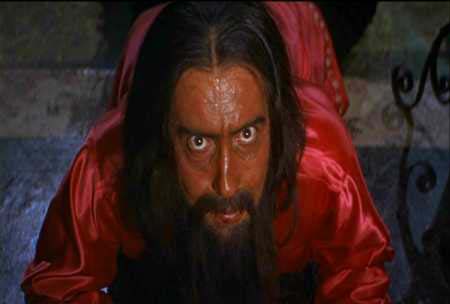
Based on the life of the enigmatic mystic "healer" who obtained great influence over the Russian Royal Family during the Romanov Dynasty, this film depicts one possible scenario of Rasputin's strange rise to power and eventual demise. "Yes, but this is extremely boring and it has nothing to do with horror", one might argue. Not true!
Though Hammer's take on the legend Rasputin is preposterous, it gave Christopher Lee the rare chance to play a character with some depth and complexity - (but thankfully he's still a bastard!) About one minute into the film, Rasputin kicks open the door and demands attention by shouting at everyone. Sporting a long beard and a deranged expression, he resembles a young Saruman just discovering his evil. Great hair, great look. Lee portrays Rasputin as a belligerent, wine guzzling womanizer. He dances, makes toasts to himself and excels at drinking competitions. He is also a hypnotist and a healer. But unlike Spiderman's "with great power comes great responsibility" nonsense,
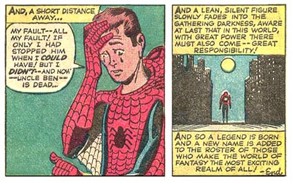
his philosophy on the matter is "the power is mine and I shall use it as I please!"
And use it he does. His first order of business is hypnotizing a servant and forcing her to push the tsar's son off of a rooftop so that he can wow the Royal Family with his gift. The scheme pays off and he quickly sleazes his way into high society. He makes many enemies along the way but systematically disposes them with his trickery. He drives one woman to suicide using hypnosis. Eventually his misdeeds catch up with him and his enemies put forth a concerted effort to bring the man down. But Christopher Lee does not go down easy. (For proof of this, refer to EVERY movie he's ever been in.)
Actually his death scene is one of the lengthiest I've ever seen on film (or in person for that matter). The true events surrounding Rasputin's murder have been greatly exaggerated over the years and Hammer milks this for everything its worth.
I'm aware that I'm a bigger fan of the Hammer films than my colleagues and therefore rate the movies higher than they likely deserve. However, I honestly don't have any bad things to say about this one.
Cell
I'm not sure what kind of Horrorthon post this is -- whether it's a review or just a normal post like we do when it's not October -- but I just read Stephen King's Cell and I wanted to talk about it and see if any of you fine gentlemen had read it.

As far as Horrorthon's recent posts, what's especially germaine about Cell is that King openly acknowledges a rather large debt to George A. Romero, whose "Dead" movies are clearly the major influence here. King has a habit of sheepishly admitting his source material by having the characters talk about it (like, say, the group in 'Salem's Lot comparing the English teacher dude to "Van Helsing") and in Cell we have quite a few references to Dawn of the Dead and once nice reference to Spielberg's War of the Worlds, which Cell also resembles quite strongly (in a very good way).
Obviously I have nothing but good things to say about Spielberg's brilliant and terrifying ode to H. G. Wells, which seems to become more of a masterpiece every time I watch it or think about it. (I recommend the essay in The New York Review of Books on Spielberg; I'll find the link later, if I feel like it.) But I want to also add that I just watched Night of the Living Dead (which I'd seen, long ago, a couple of times) and then Dawn of the Dead, which is stunning, brilliant, unique, amazing. I had never seen if before and I'm just astonished at how good it is, and the wonderful way it incorporates all the best elements of 1970s cinema. It's so good that I have to re-orient my thinking about horror fiction and horror movies in general, and, of course, that's where Cell comes in, because if anyone's going to use George A. Romero to re-orient their thinking about horror fiction, why not have it be Stephen King?
Spielberg, King, Romero, H.G. Wells: these authors and many others are all dancing around a central idea which is clearly a vital armature of horror: that which has been called "apocalyptic fiction" or "dystopian fiction" (although the first term is more accurate: "dystopian" sci-fi tends to drift in the direction of, "Okay, it's after a big nuclear war" etc. etc. and we all immediately fall asleep because the only remaining cultural value of that train of thought might be Charlton Heston kneeling in the sand, bellowing).
I have an essay by J. G. Ballard (British sci-fi author; wrote the semiautobiographical Empire of the Sun) (more Spielberg) about apocalyptic fiction, wherein he presents an essentially Freudian or Jungian analysis about dreams and destruction and the point at which the infant learns to tell the difference between itself and the rest of the universe: Ballard argues that sci-fi writers blow up the Earth or whatever because they tap into an impulse that precedes this development -- a pre-Coopernican tantrum that brings down cities in flame, if you will. I prefer to think that the point of it all isn't tantrums but adult people; the strength of Dawn of the Dead and War of the Worlds (Spielberg or Wells) and The Stand and Cell is the examination of the human soul, pushed past all conventional modes of psychic endurance into a rarefied atmosphere of hyper-intensified emotion and meaning. If it's all gone, then what's left? Characters in apocalyptic fiction are our surrogates or proxies, answering these questions for us so that, when we awaken into reality and look out the window at the un-interrupted, normal fabric of reality, it looks a little different, hopefully in an enlightening way.
There's another appealing level of meaning here in that the protagonist of Cell is an author of graphic novels -- and this isn't just an amusing character detail: it's actually quite vital to the plot.
Anyway, Cell is probably the best King I've read in a long, long time (certainly better than any of his "grumpy old jerks in Maine and the troubled writer who's getting on in years but remembers Vietnam" efforts). I haven't read the last three Dark Tower volumes, although that's really an entirely different brand of vodka (as Danny Ocean would say). It's great to read a King novel in which he's dishing up the blood and gore and violence and fear without apologizing for it or trying to win the Booker Prize again (although he deserved it). It's great to read a King novel that doesn't completely fall apart two thirds of the way through -- one for which he clearly sat down beforehand and figured out what the hell he was trying to do. The beginning of Cell may be a bit rusty, and I wasn't too hopeful going in (especially since I believe almost all of Everything's Eventual to be re-fried garbage) but boy, does he get his mojo working along the way.
Have any of you gentlemen read this book? I'd love to go into more detail about it. (And, by the way, DON'T GIVE AWAY THE ENDING OF DAWN OF THE DEAD because I decided to put off watching the final, undoubtably shocking and incredible 35 minutes of the movie in order to read Cell, which was probably a good idea. You can't double-dip this stuff; it doesn't work.)
I'll leave you with the excellent frontispiece epigraphs from Cell, which are vintage King:
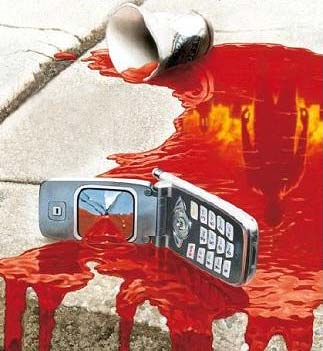
As far as Horrorthon's recent posts, what's especially germaine about Cell is that King openly acknowledges a rather large debt to George A. Romero, whose "Dead" movies are clearly the major influence here. King has a habit of sheepishly admitting his source material by having the characters talk about it (like, say, the group in 'Salem's Lot comparing the English teacher dude to "Van Helsing") and in Cell we have quite a few references to Dawn of the Dead and once nice reference to Spielberg's War of the Worlds, which Cell also resembles quite strongly (in a very good way).
Obviously I have nothing but good things to say about Spielberg's brilliant and terrifying ode to H. G. Wells, which seems to become more of a masterpiece every time I watch it or think about it. (I recommend the essay in The New York Review of Books on Spielberg; I'll find the link later, if I feel like it.) But I want to also add that I just watched Night of the Living Dead (which I'd seen, long ago, a couple of times) and then Dawn of the Dead, which is stunning, brilliant, unique, amazing. I had never seen if before and I'm just astonished at how good it is, and the wonderful way it incorporates all the best elements of 1970s cinema. It's so good that I have to re-orient my thinking about horror fiction and horror movies in general, and, of course, that's where Cell comes in, because if anyone's going to use George A. Romero to re-orient their thinking about horror fiction, why not have it be Stephen King?
Spielberg, King, Romero, H.G. Wells: these authors and many others are all dancing around a central idea which is clearly a vital armature of horror: that which has been called "apocalyptic fiction" or "dystopian fiction" (although the first term is more accurate: "dystopian" sci-fi tends to drift in the direction of, "Okay, it's after a big nuclear war" etc. etc. and we all immediately fall asleep because the only remaining cultural value of that train of thought might be Charlton Heston kneeling in the sand, bellowing).
I have an essay by J. G. Ballard (British sci-fi author; wrote the semiautobiographical Empire of the Sun) (more Spielberg) about apocalyptic fiction, wherein he presents an essentially Freudian or Jungian analysis about dreams and destruction and the point at which the infant learns to tell the difference between itself and the rest of the universe: Ballard argues that sci-fi writers blow up the Earth or whatever because they tap into an impulse that precedes this development -- a pre-Coopernican tantrum that brings down cities in flame, if you will. I prefer to think that the point of it all isn't tantrums but adult people; the strength of Dawn of the Dead and War of the Worlds (Spielberg or Wells) and The Stand and Cell is the examination of the human soul, pushed past all conventional modes of psychic endurance into a rarefied atmosphere of hyper-intensified emotion and meaning. If it's all gone, then what's left? Characters in apocalyptic fiction are our surrogates or proxies, answering these questions for us so that, when we awaken into reality and look out the window at the un-interrupted, normal fabric of reality, it looks a little different, hopefully in an enlightening way.
There's another appealing level of meaning here in that the protagonist of Cell is an author of graphic novels -- and this isn't just an amusing character detail: it's actually quite vital to the plot.
Anyway, Cell is probably the best King I've read in a long, long time (certainly better than any of his "grumpy old jerks in Maine and the troubled writer who's getting on in years but remembers Vietnam" efforts). I haven't read the last three Dark Tower volumes, although that's really an entirely different brand of vodka (as Danny Ocean would say). It's great to read a King novel in which he's dishing up the blood and gore and violence and fear without apologizing for it or trying to win the Booker Prize again (although he deserved it). It's great to read a King novel that doesn't completely fall apart two thirds of the way through -- one for which he clearly sat down beforehand and figured out what the hell he was trying to do. The beginning of Cell may be a bit rusty, and I wasn't too hopeful going in (especially since I believe almost all of Everything's Eventual to be re-fried garbage) but boy, does he get his mojo working along the way.
Have any of you gentlemen read this book? I'd love to go into more detail about it. (And, by the way, DON'T GIVE AWAY THE ENDING OF DAWN OF THE DEAD because I decided to put off watching the final, undoubtably shocking and incredible 35 minutes of the movie in order to read Cell, which was probably a good idea. You can't double-dip this stuff; it doesn't work.)
I'll leave you with the excellent frontispiece epigraphs from Cell, which are vintage King:
The id will not stand for a delay in gratification. It always feels the tension of the unfulfilled urge.
SIGMUND FREUD
Human aggression is instinctual. Humans have not evolved any ritualized aggression-inhibiting mechanisms to ensure the survival of the species. For this reason man is considered a very dangerous animal.
KONRAD LORENZ
Can you hear me now?
VERIZON
Monday, November 13, 2006
Cigarette Burns
(2005) ***

In concept Showtime’s Masters of Horror is a terrific idea; take 13 of today’s best horror movie directors and give them free reign to direct their own stories for this anthology series. In the first season we get fresh work from people like Tobe Hooper, Don Coscarelli, George Romero, Dario Argento, etc. Masters of Horror is great in concept yet wildly uneven. John Carpenter’s Cigarette Burns is my favorite of the 4 I checked out.
In Cigarette Burns the always-creepy Udo Kier (does this guy ever age?), collector of rare film memorabilia, hires Kirby Sweetman to track down a French film called Le Fin Absolue Du Monde (The Absolute End of the World). This is not just any ordinary film, mind you; Kirby is informed that Le Fin Absolue Du Monde was only shown to an audience one time and with disastrous results. The audience devolved into a mob of violent rage. Apparently the film exerts a strange effect on all those who view it.
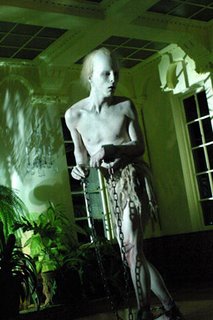
As Kirby employs some good old-fashioned private dick work he is initially convinced that the film does not exist. His search for the seemingly mythological film takes him on a dark journey, which includes a cast of increasingly creepy characters. As he gets closer to finding the film he begins to experience visions of the titular cigarette burns (for those who are not nerds, cigarette burns are actual burns in the film which signal the projectionist that a reel change is about to occur. I know this because I was a film projectionist in college. Yep, that’s right, while others spent their Friday nights in a stew of sex and drunkenness, yours truly delighted audiences with such fare as The Rocky Horror Picture Show. I digress). Eventually his strange journey leads to the wife of a deceased collector who possessed the only copy of Le Fin Absolue Du Monde. Apparently, he too succumbed to the film’s deadly power. After handing the film over to Udo, Le Fin Absolue Du Monde is screened once again.

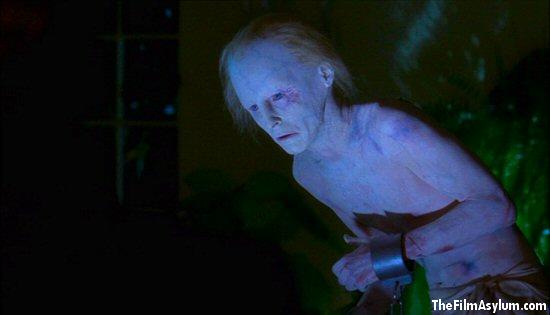
As I was watching this film I kept remarking to myself, “Knowing that the film will kill you if you watch it, it’s unrealistic to believe that anyone would.” Then I thought, “Would I watch it?” to which I responded, “Hell yes!" Then I began to think that I needed a script for Seroquel since I was apparently talking to myself a little too much. Anyway, it’s like that videotape from The Ring, you would all totally watch it. Of course you would. Cigarette Burns is a satisfying little story with a few moments of gore (see above photo). And yes we do get to see some glimpses of the creepy movie. Worth your time.
In concept Showtime’s Masters of Horror is a terrific idea; take 13 of today’s best horror movie directors and give them free reign to direct their own stories for this anthology series. In the first season we get fresh work from people like Tobe Hooper, Don Coscarelli, George Romero, Dario Argento, etc. Masters of Horror is great in concept yet wildly uneven. John Carpenter’s Cigarette Burns is my favorite of the 4 I checked out.
In Cigarette Burns the always-creepy Udo Kier (does this guy ever age?), collector of rare film memorabilia, hires Kirby Sweetman to track down a French film called Le Fin Absolue Du Monde (The Absolute End of the World). This is not just any ordinary film, mind you; Kirby is informed that Le Fin Absolue Du Monde was only shown to an audience one time and with disastrous results. The audience devolved into a mob of violent rage. Apparently the film exerts a strange effect on all those who view it.
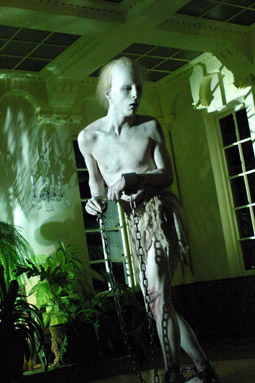
As Kirby employs some good old-fashioned private dick work he is initially convinced that the film does not exist. His search for the seemingly mythological film takes him on a dark journey, which includes a cast of increasingly creepy characters. As he gets closer to finding the film he begins to experience visions of the titular cigarette burns (for those who are not nerds, cigarette burns are actual burns in the film which signal the projectionist that a reel change is about to occur. I know this because I was a film projectionist in college. Yep, that’s right, while others spent their Friday nights in a stew of sex and drunkenness, yours truly delighted audiences with such fare as The Rocky Horror Picture Show. I digress). Eventually his strange journey leads to the wife of a deceased collector who possessed the only copy of Le Fin Absolue Du Monde. Apparently, he too succumbed to the film’s deadly power. After handing the film over to Udo, Le Fin Absolue Du Monde is screened once again.

As I was watching this film I kept remarking to myself, “Knowing that the film will kill you if you watch it, it’s unrealistic to believe that anyone would.” Then I thought, “Would I watch it?” to which I responded, “Hell yes!" Then I began to think that I needed a script for Seroquel since I was apparently talking to myself a little too much. Anyway, it’s like that videotape from The Ring, you would all totally watch it. Of course you would. Cigarette Burns is a satisfying little story with a few moments of gore (see above photo). And yes we do get to see some glimpses of the creepy movie. Worth your time.
Subscribe to:
Posts (Atom)
Salem's Lot 1979 and Salem's Lot 2024
Happy Halloween everybody! Julie's working late and the boy doesn't have school tomorrow so he's heading to one of those crazy f...

-
 (2007) * First of all let me say that as far as I could tell there are absolutely no dead teenagers in this entire film. Every year just ...

